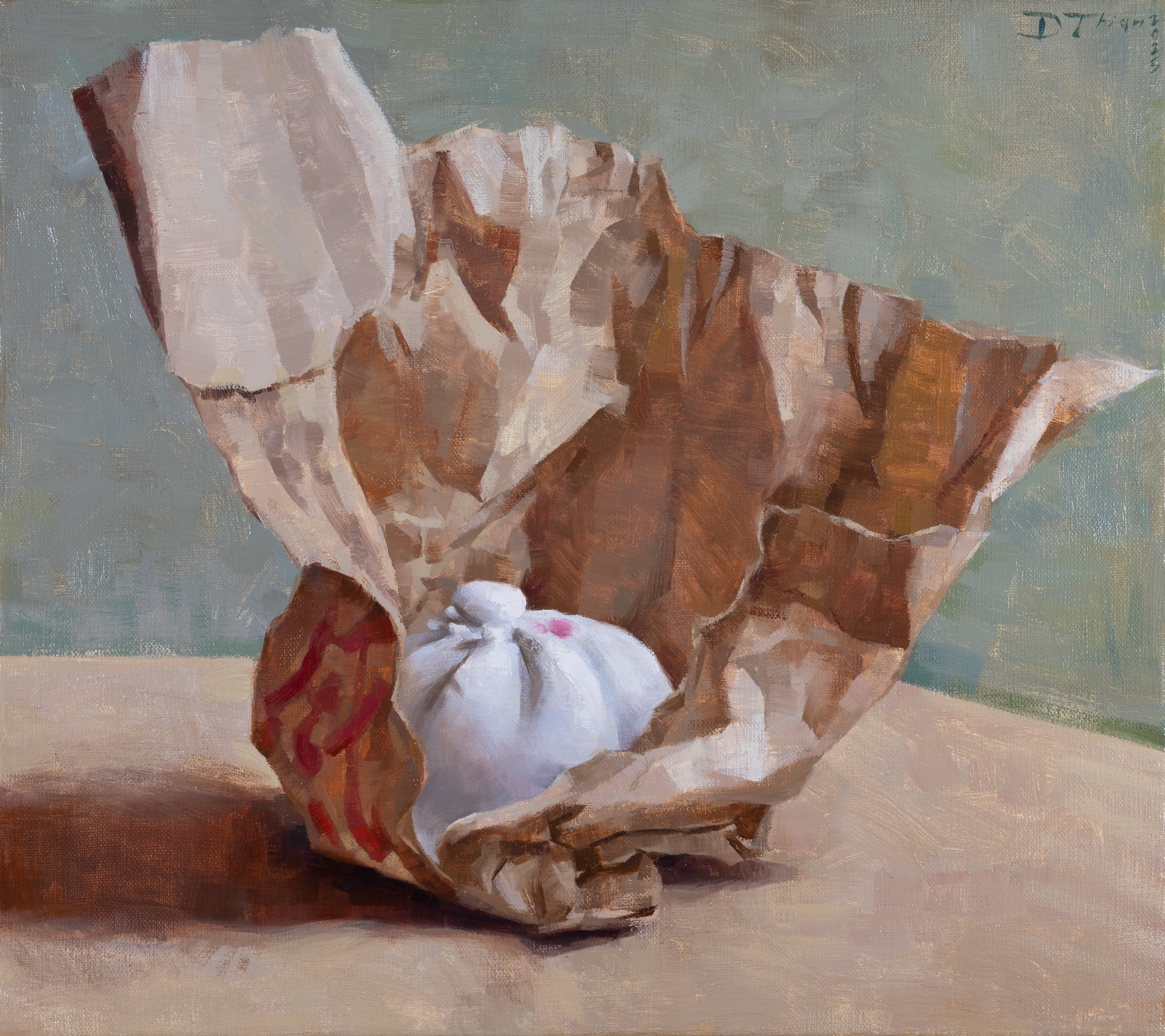

Big Bao 6 •

Dabao •
Lotus •

Family Feud •
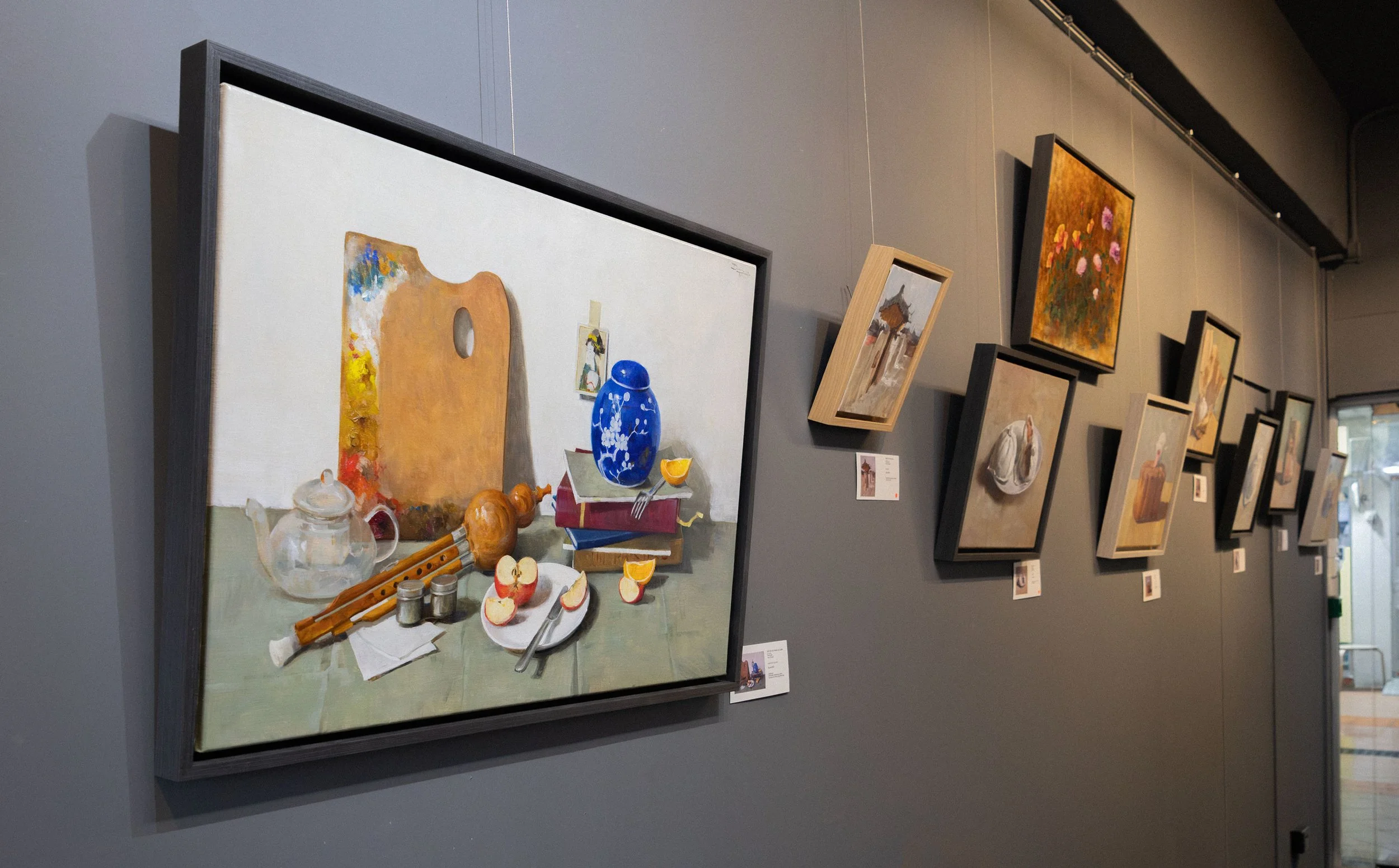
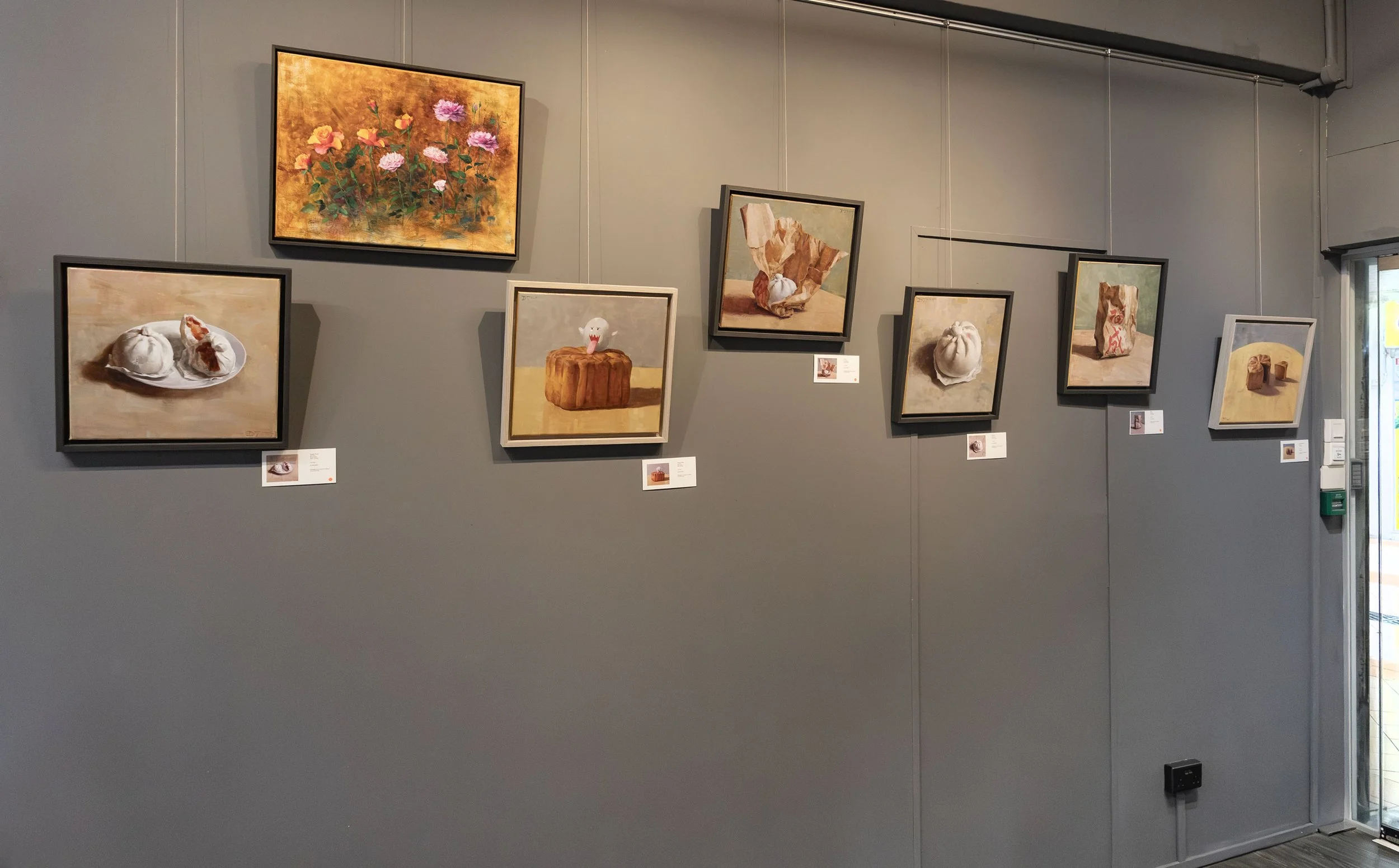
Ways of Eating gathers recent paintings of foods. Initially, for these paintings I was not so much interested in evoking some sense of local endearment or pride. I was instead finding a theme and objects that I could easily obtain, and were fun to paint. Fun and challenging. And so on a rainy day I walked down to my nearest coffeeshop and ordered some paus.
And with these paus I was able to paint freely. In my previous still-life work I was always trying to push the still-life genre. I had summoned all the virtuosity of technique and feeling and painted some bougainvilleas in the most delicate painterly way. I had pushed myself to invoke the painters I loved, truly loved: Hokusai, Henri-Fantin Latour. I had died under layers of layers of blue to achieve colours that I only saw in my dreams.
And now with these fluffy white paus before me, I instead, kept my mind still, and painted simply. And there is so much promise in that, promise that is sullied if I articulated any further.
The title Ways of Eating is a cheeky play on words alluding to the seminal essay Ways of Seeing, by John Berger. I've harped on this essay many times to many friends before. It's a complete misreading of perceptual painting. Berger thinks painting can't be interpreted without the looming patron, and so all technique is shallow, commercial. I think differently, I think technique in painting, is a portal to learning to labour over our works of art; which is in turn a portal to love our art.
And so this exhibition gathers works in which I am trying to love my art once again. The human experience is one of forgetfulness, and artists are no exception. Some of us need grand gestures, some of us near-death experiences. Other exhibitions throw dissertations upon dissertations to justify why an art-piece deserves adoration. For me it took some fluffy white paus, dedicating my twenties to still-lifes, and a rainy day.
The First Ode
In this meritocratic metropolis, melancholy millennials like myself lament the transition that comes with so much haste—and so shuaige becomes uncle in the blink of an eye. And so I really have become an uncle: on the week of my first exhibition (DT: An Introduction) my niece on Lillian’s side was born.
Since that exhibition I’ve been pushing the mantle in my still-life works, sometimes relentlessly, sometimes floundering. Compositions became more elaborate, and the write-ups and the thoughts behind them—ever more profound. I told myself and collectors that I was chasing unrestrained sentimentality, but ironically it lead to me feeling more restrained. I took another step, and eased myself further up this mountain trail. I was mid-way to the summit, and I felt the urge to wander sideways and not further upwards.
So I stopped pacing upwards and glanced at the eaves of the ridgeline trees; and I realised that my niece turns four this year in September. Her age marks my time in this profession, and each weekend when we visit, she too leaves a mark on me as she grows. And as she grows, I in turn grow increasingly aware of the miracle of life, of the beauty of childhood and age. Miracles easily forgotten in a life littered with milestones, each one weighed heavily toward some arbitary summit—some fetish of a perfect life as carved by a beloved myth of meritocracy.
On this journey upwards, I had stopped at neither a milestone nor summit. Under the canopy were beautiful leaves, filtering the fading glow of dusk. This high up, and this late into the evening, flowers were opening up all around me. Resting my backpack onto the ground, I stepped off the trail…
The mountain air was cold yet intimate. As the sky began to glint, I was prompted to dwell not on complex compositions, nor scintillating designs of colour. Lying on a patch of warm fuzzy grass, beneath a cold blue canopy, I thought of simple, more naive paintings. As I retired for the night, I dreamt deeply.
2/8/25
The Ode Before